
How Much Revenue Should Email Marketing Drive for an Ecommerce Brand?
Most brands know email marketing is a powerful part of their marketing mix, but in our experience we find that growing brands still struggle to fully optimize the channel. There are louder and more expensive channels battling for attention (who wants to throw money at ads and not see a return?). Flows go untouched, campaigns aren’t sent as often as they should be, and little attention is paid to growing the list.
But just how much revenue should be coming from your email marketing in 2026? This article breaks down this important benchmark, and what to do if you aren’t hitting that target.
The benchmark: What percentage of revenue should email drive?
By now, you’ve probably heard that at least 30% of your direct, ecommerce revenue should be coming from email marketing, but the truth is that the answer is a bit more nuanced than that.
Here at 624 Agency, we’ve helped brands scale from $1 million to $25 million in revenue with email marketing. The question of revenue percentage that should be coming from email marketing is one of the clearest signals that a program is under performing, but there isn’t a one-size-fits-all answer. Businesses that are in the early stages of business or have an under-built lifecycle marketing program may only be generating 5-8% of their revenue from email marketing, while businesses that are more established or rely more on repeat customers than acquisition may drive closer to 40% of their revenue from email marketing. However, anything less than 10% is typically a key indicator that your email marketing is underperforming.
How to check your own attribution in Klaviyo right now
First things first. Do you know where you stand with your email marketing attribution? This is the amount of revenue that’s coming from Klaviyo. You can check this quickly from the homescreen of your Klaviyo account. Look at the overall percentage of ecommerce revenue coming from Klaviyo, and then look at how much revenue is coming from email marketing, from SMS; from flows vs. campaigns.
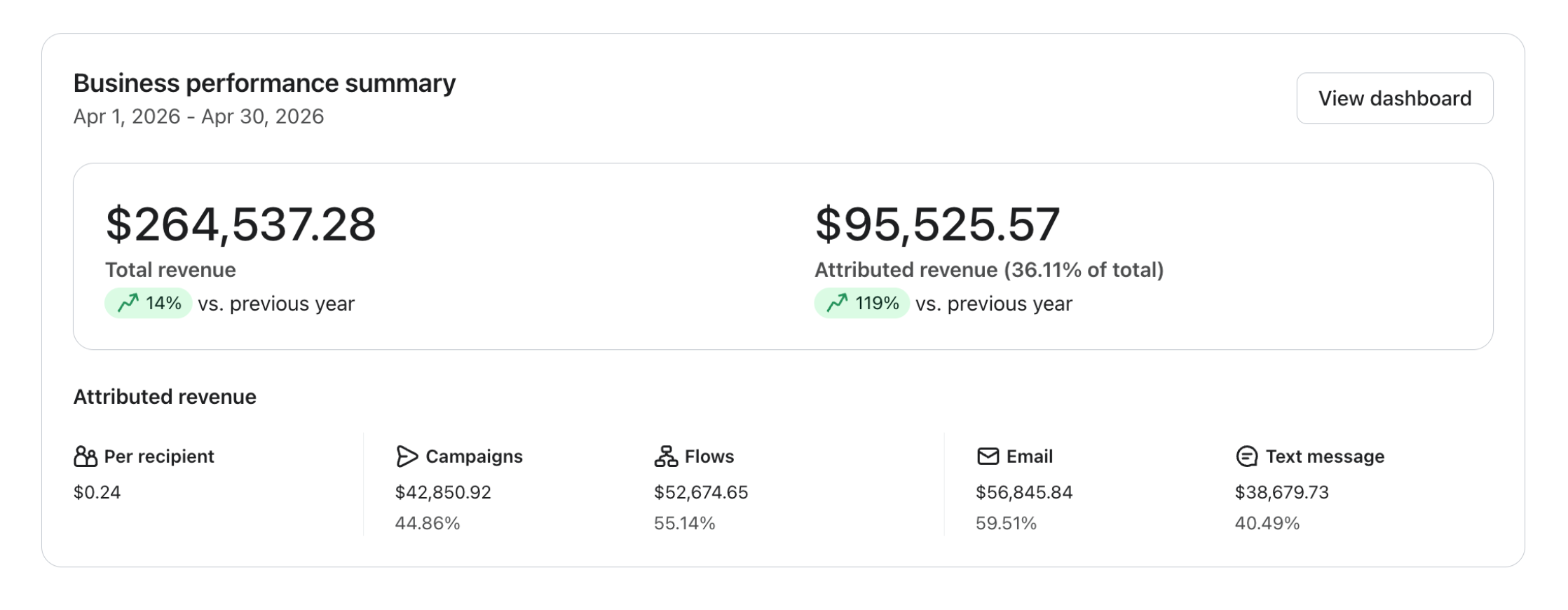
Then, you should check your attribution settings. Sometimes, the percentage of revenue from email marketing is inflated because brands don’t know how to update the standard attribution settings in Klaviyo. This can be the difference between what looks like a top performing program, and one that still needs to be optimized.
Go to settings → attribution and check for these things:
Make sure bot clicks and Apple Mail opens are excluded. (Check these boxes)
Click into “compare models” and look at the attribution windows. The default is 5 days, but if you are sending campaigns multiple times per week, you probably want to decrease this. You may also want to consider how long customers generally think about purchasing your product before making a decision.
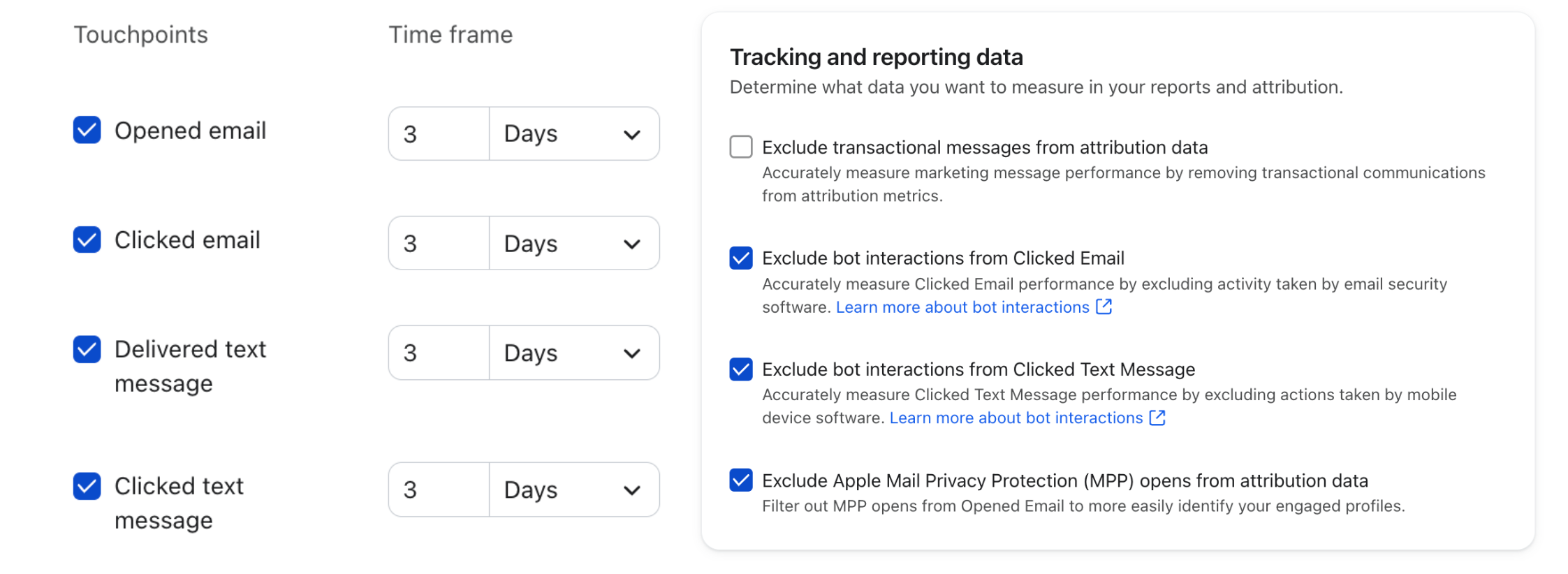
Klaviyo’s “compare model” tool is helpful to see how your attribution will change with the updates you make. Keep in mind that all changes are retroactive too, so your historical data will be updated too. Making changes to your attribution model will give you a more accurate assessment of how your email marketing is performing against benchmarks.
The gap between where you are and where you should be: assessing the situation
Now that you know your attribution numbers, you can assess your program against this benchmark.
Under 10% of revenue from email marketing: this is a sign that there is a problem with your email marketing or your program is under built
10-15% of revenue from email marketing: you likely have flows that are missing from your arsenal, or you aren’t sending enough campaigns.
15-30% of revenue from email marketing: your email marketing is performing decently, but there is some fine tuning to do.
30-40% of revenue from email marketing: your email marketing is fully optimized. Great job!
Now look at the percentage of revenue that’s coming from flows vs. campaigns. This number will be helpful in telling you where to focus your efforts first. A low percentage of revenue coming from flows suggests that you are missing key flows, or they are underperforming. A low percentage of revenue from campaigns likely means you need to optimize your campaign strategy.
Why most brands fall short of 30-40% of revenue
List growth is not a priority - you’re running ads but you aren’t focused on lead generation, so your email list isn’t growing. Without new subscribers entering your list, it’s hard to scale your email marketing program.
Opt-in forms aren’t converting – people are visiting your site, but you aren’t converting them to subscribers.
Automations are under built – this is one of the biggest culprits of an underperforming email marketing program. Most brands have the basics (welcome flow, abandonment series, post purchase), but there is so much more you can do with flows to engage your audience with the right content at the right time.
Campaign cadence is low or inconsistent – Depending on your business stage and list size, you should be working towards daily campaign sends. When we tell clients this they are shocked, but the simple fact is, increasing your campaign cadence is one of the simplest ways to increase revenue from email marketing.
Deliverability is weak – if your emails never make it to the inbox, they will never have the opportunity to drive revenue. Poor deliverability is one of the biggest drags on revenue, and it is one that can be difficult to see.
What 'good email' actually looks like at the $2–5M stage
Your opt-in forms are converting at least 3% of people who see it
Automations are driving ~40% of email marketing revenue.
You have all the basic flows covered: welcome, abandoned cart, abandoned browse, post purchase, as well as secondary flows like cross sell, winback, sunset and loyalty flows. You review these flows weekly to optimize them and are always improving them so they continue to convert subscribers.
You have a consistent campaign calendar and are working your way towards daily email sends.
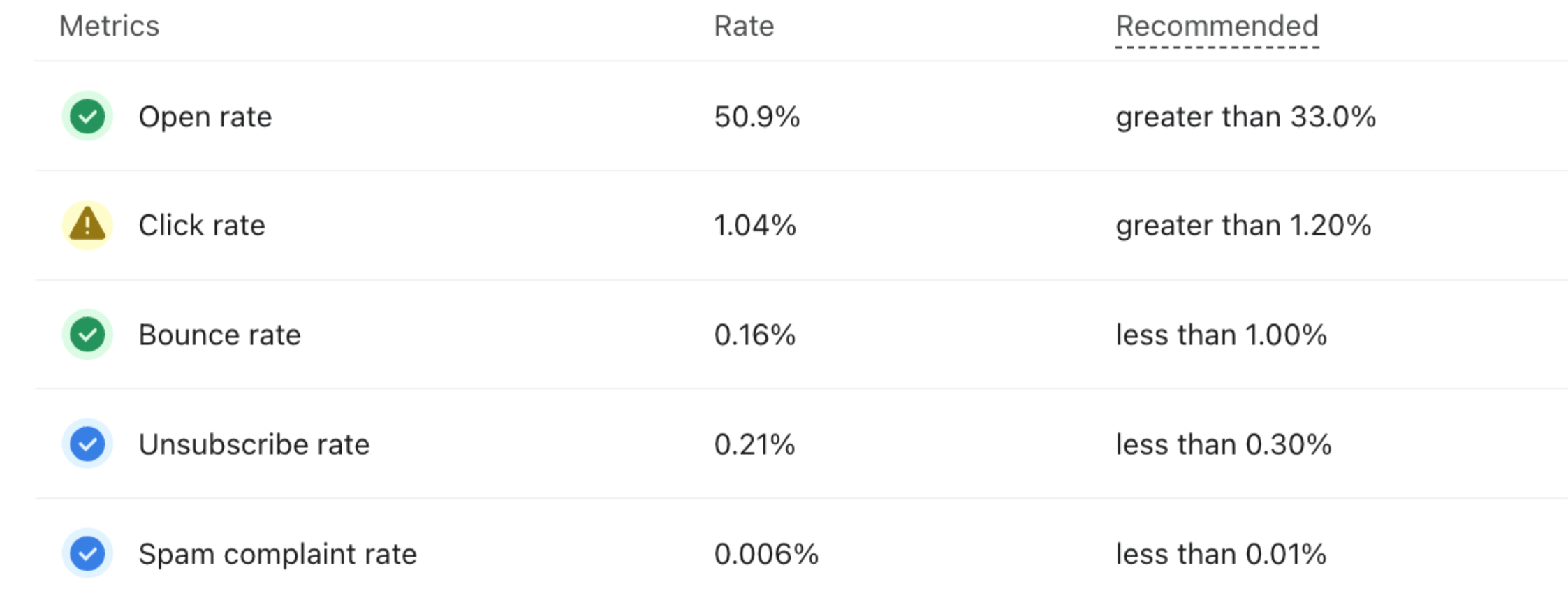
Your deliverability score is at least 80, and your deliverability metrics fall under the recommended benchmarks.
Is your email marketing underperforming?
Here at 624 Agency, we help ecommerce brands scale from $1 million to $25 million, and the first step is making sure their email marketing is working for them. If your email marketing isn’t driving at least 30% of revenue, it’s time to consult an expert who can audit your program and give you actionable recommendations for how to improve the percentage of revenue coming from your email marketing.
Frequently Asked Questions
What is a good email marketing revenue percentage for ecommerce brands?
A good benchmark is 30–40% of direct ecommerce revenue coming from email marketing. Brands in earlier growth stages or with under-built programs may see closer to 10–15%, while more established brands with strong retention and repeat purchase rates can reach 40% or higher. Anything under 10% is typically a signal that your email program needs attention.
How do I know if my Klaviyo attribution numbers are accurate?
Klaviyo's default attribution settings can overstate email revenue if bot clicks and Apple Mail Privacy opens aren't excluded. Go to Settings → Attribution, check the boxes to exclude both, and review your attribution window — the default 5-day window may be too broad if you're sending campaigns frequently. Use Klaviyo's "compare models" tool to see how changes affect your numbers before committing.
What's the difference between email revenue from flows vs. campaigns, and why does it matter?
Flows are automated sequences triggered by subscriber behavior (like a welcome series or abandoned cart), while campaigns are one-time sends to a segment of your list. A healthy email program typically sees flows driving around 40% of email revenue. If your flow revenue is low, you're likely missing key automations. If your campaign revenue is low, your sending cadence or segmentation probably needs work.
How often should an ecommerce brand send email campaigns?
Most brands send far less frequently than they should. Depending on your list size and business stage, you should be working toward daily campaign sends. This surprises most founders, but consistent sending — paired with good segmentation so you're not emailing unengaged subscribers — is one of the most direct ways to increase email revenue without changing anything else about your program.